
Ask ten experienced off-road riders about bike setup, and you’ll probably hear discussions about suspension, tires, handlebars, or gearing.
But one of the most overlooked adjustments sits directly beneath your boots.
Your footpegs.
Whether you’re riding technical enduro, hard enduro, singletrack, or motocross, footpeg position influences how your body interacts with the motorcycle. A few millimeters may not sound significant on paper, but on the trail, those millimeters can affect balance, mobility, comfort, and overall control.
So what is the best footpeg position for off-road riding?
For most riders, the answer lies in a slightly rearward and lower position than stock. The challenge is determining how much adjustment is right for your riding style.
Why Footpeg Position Matters More Than Most Riders Realize
When riding off-road, your feet serve as the primary connection between your body and the motorcycle.
Every time you:
- Stand through rough terrain
- Absorb impacts
- Shift weight in a corner
- Climb a steep hill
- Descend technical sections
You’re using your footpegs to control the motorcycle.
In fact, footpegs influence far more than rider comfort. They directly affect balance, weight transfer, cornering behavior, and overall bike stability. If you’d like a deeper breakdown, check out our guide on How Footpeg Position Affects Motorcycle Control.
Unlike road riding, off-road riding requires constant movement. Riders rarely stay in one position for long. The ability to move naturally and efficiently around the bike often determines how much control you have when conditions become challenging.
This is why experienced riders often say that control starts from the ground up.
Understanding the Rider Triangle
Off-road ergonomics are built around what many riders call the rider triangle:
- Handlebars
- Seat
- Footpegs
Most riders immediately notice handlebar changes because they directly affect arm position.
Handlebars often receive the most attention during bike setup, but many riders are surprised to discover how much influence footpegs have on overall control. We explored this topic in detail in Footpegs vs Handlebars: Which Has the Bigger Impact on Dirt Bike Control?
Footpegs are different.
They influence your entire lower body, including:
- Knee angle
- Hip position
- Standing posture
- Weight distribution
- Rider mobility
When the rider triangle feels cramped, riders often experience fatigue faster and struggle to move efficiently on the motorcycle.
A properly positioned footpeg can open up the rider triangle and create a more natural standing position without requiring major modifications elsewhere.
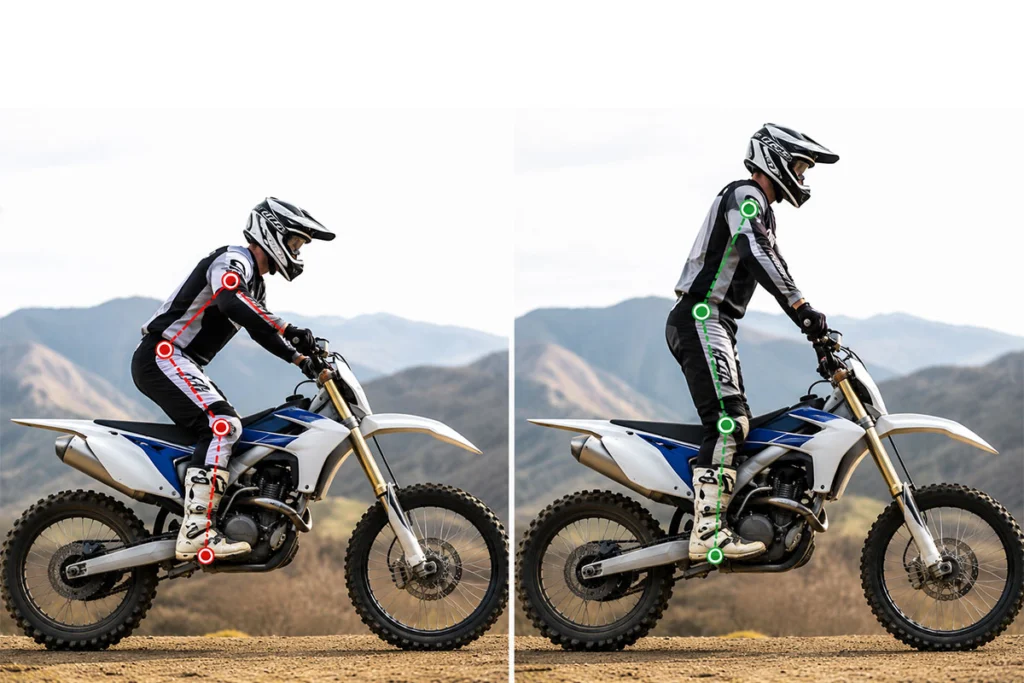
What Happens When Footpegs Move Rearward?
Moving the footpegs rearward by a small amount changes how the rider’s weight is distributed on the motorcycle.
Benefits often include:
Improved Stability
A rearward position helps riders feel more centered on the bike, especially when standing through rough terrain.
Better Body Movement
Technical riding requires constant adjustments in body position. Additional room between the rider and the handlebars allows smoother transitions between seated and standing positions.
More Controlled Weight Transfer
Rather than pulling on the handlebars, riders can use their lower body more effectively to influence the motorcycle’s behavior.
For most off-road applications, a 5mm rearward offset provides noticeable benefits without dramatically changing the bike’s handling characteristics.
What Happens When Footpegs Move Lower?
Lower footpegs have become increasingly popular among enduro and hard enduro riders.
The reason is simple.
Most riders spend far more time standing today than they did a decade ago.
A lower footpeg position helps by:
- Opening the knee angle
- Reducing pressure on the legs
- Improving standing comfort
- Increasing rider mobility
These benefits become especially noticeable during long rides or technical terrain where riders may remain standing for extended periods.
Many taller riders discover that lower footpegs make their motorcycle feel more natural almost immediately.
If you’re over 6 feet tall and struggle with cramped ergonomics on your dirt bike, our guide to Best Footpegs for Tall Riders explains how lower footpegs can improve comfort and standing control.
Real-World Riding Situations Where Footpeg Position Makes a Difference
Rock Gardens and Technical Terrain
When navigating rock gardens, balance and impact absorption become more important than outright speed.
A slightly lower footpeg position allows riders to use their legs more effectively as a secondary suspension system.
Instead of fighting the motorcycle through every obstacle, the rider can stay relaxed and maintain traction more consistently.
Steep Climbs
Climbing steep hills often requires aggressive body positioning.
Riders need enough room to move forward while maintaining balance and traction.
A rearward footpeg position creates additional space to move around the motorcycle without feeling cramped, making body positioning feel more natural during technical climbs.
Long Enduro Days
A two-hour trail ride and a six-hour enduro ride place very different demands on the rider.
Small ergonomic improvements become increasingly important as fatigue accumulates.
Many riders report that lower footpegs reduce knee strain and help maintain a comfortable standing position throughout the day.
Stock Footpegs vs Offset Footpegs
While stock footpegs work adequately for most riders, they are designed to fit a wide range of users rather than optimize performance for specific riding styles.
| Feature | Stock Footpegs | Offset Footpegs |
|---|---|---|
| Standing Comfort | Good | Improved |
| Knee Angle | Standard | More Open |
| Rider Mobility | Standard | Increased |
| Long-Ride Fatigue | Higher | Reduced |
| Technical Terrain Control | Good | Improved |
| Body Position Adjustability | Limited | Enhanced |
The goal isn’t to completely change how the motorcycle handles.
It’s to make it easier for the rider to stay comfortable and maintain control in demanding conditions.
Related products
-

CNC Titanium Motorcycle Footpegs for Kawasaki
$489.99 -
GR5 Titanium Foot Pegs for Beta 2020-2024
$237.99 -
GR5 Titanium Foot Pegs For BMW
Original price was: $169.99.$130.99Current price is: $130.99. -
Gr5 Titanium Foot Pegs for KTM 2017-2023
$237.99

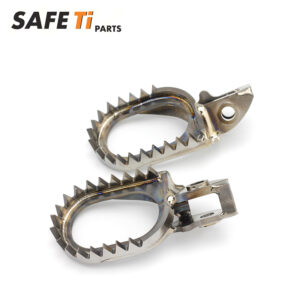
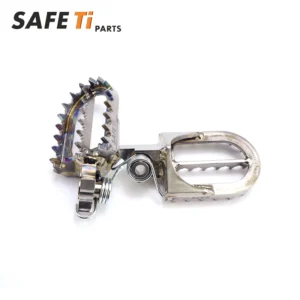

Comparing Two Popular Off-Road Footpeg Positions
After evaluating common off-road riding scenarios, two offset configurations consistently stand out.
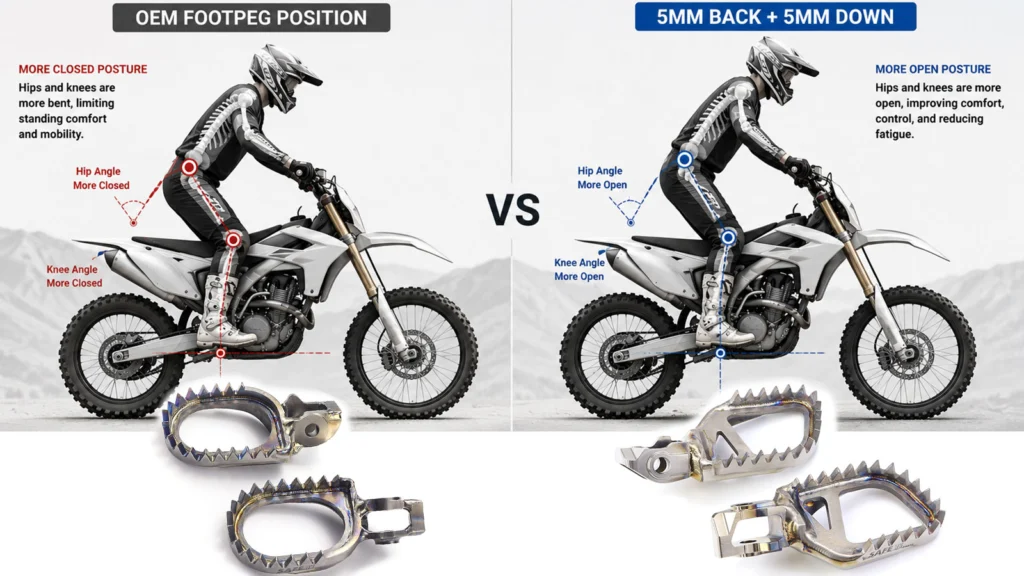
5mm Back + 5mm Down
This setup provides a balanced improvement over stock positioning.
Best suited for:
- Motocross riders
- Trail riders
- Weekend off-road riders
- Mixed-terrain riding
Benefits include:
- Improved standing comfort
- Better rider mobility
- Minimal adaptation period
- Excellent ground clearance retention
For riders looking for an all-around upgrade, this is often the most versatile option.
5mm Back + 10mm Down
This setup places greater emphasis on standing comfort and rider ergonomics.
Best suited for:
- Enduro riders
- Hard enduro riders
- Taller riders
- Riders who spend significant time standing
Benefits include:
- More relaxed knee angle
- Reduced leg fatigue
- Increased freedom of movement
- Improved comfort during long rides
The additional 5mm of drop may seem minor, but many riders notice the difference within the first ride.
What We Learned From Testing Different Footpeg Positions
At SAFETi, we have spent considerable time evaluating how different footpeg positions affect rider comfort and control in off-road environments.
While there is no universal setup that works for every rider, two positions consistently delivered the best balance between ergonomics and handling:
- 5mm Back + 5mm Down
- 5mm Back + 10mm Down
Both configurations improve standing comfort without drastically altering the motorcycle’s handling characteristics.
The choice typically comes down to rider height, riding style, and how much time is spent standing during a ride.
For most riders, either option offers a noticeable improvement over a traditional stock footpeg position.
Why Footpeg Design Matters as Much as Position
Position is only one part of the equation.
The design of the footpeg itself also affects performance.
Factors such as:
- Platform width
- Grip pattern
- Strength
- Material selection
all influence rider confidence and control.
A well-designed titanium footpeg combines optimized positioning with exceptional strength, lightweight construction, and reliable grip in mud, sand, rocks, and wet conditions.
Durability is equally important. Before choosing any aftermarket footpeg, it’s worth understanding how different materials perform under extreme loads. See the results from our Titanium Footpegs Pressure Test: Can They Really Handle Extreme Riding?
When paired with an effective offset position, riders gain both ergonomic and performance benefits.
Which Setup Should You Choose?
If your riding includes a mixture of trails, motocross tracks, and general off-road use, a 5mm Back + 5mm Down position offers an excellent balance of comfort, control, and versatility.
If you’re a taller rider or frequently ride technical enduro terrain where standing is constant, a 5mm Back + 10mm Down position may provide the additional comfort and mobility you’re looking for.
The best footpeg position isn’t necessarily the most extreme option.
It’s the one that allows you to move naturally, stay comfortable, and maintain control when the terrain becomes challenging.
Final Takeaway
The best off-road setup isn’t always found in expensive suspension upgrades or major modifications.
Sometimes, a few millimeters at the footpegs can completely change how a motorcycle feels beneath you.
A slightly rearward and lower footpeg position helps riders stay balanced, move more freely, and reduce fatigue during demanding rides.
For most riders, 5mm Back + 5mm Down delivers an excellent all-around setup.
For taller riders and technical enduro enthusiasts, 5mm Back + 10mm Down often provides the greatest improvement in standing comfort and rider mobility.
Because when the trail gets rough, real control starts where your boots meet the bike.
Ready to Upgrade Your Setup?
Finding the right footpeg position is only one part of improving off-road performance. Choosing the correct platform size, grip design, material, and offset configuration can have an equally significant impact on rider confidence and control.
For a complete overview of footpeg selection and installation considerations, read our Off-Road Motorcycle Footpeg Modification Guide.

