
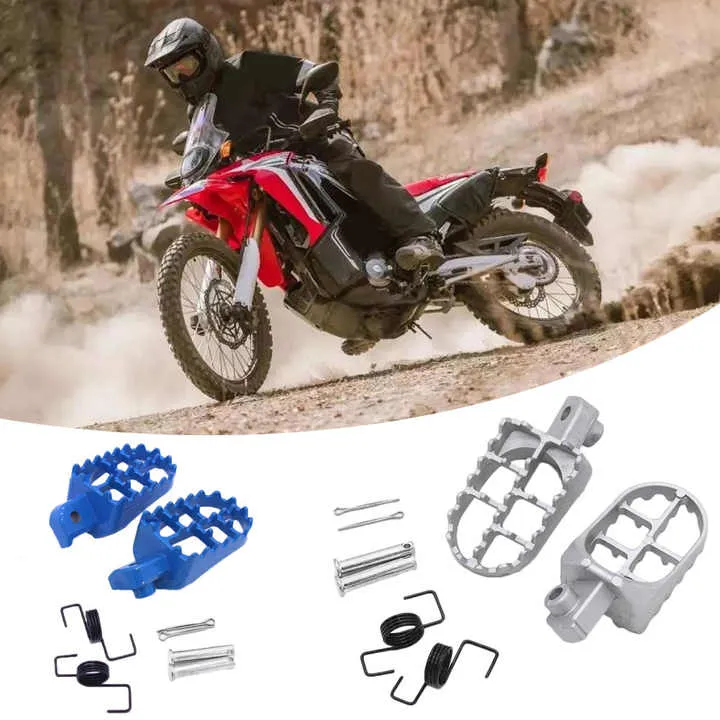
In off-road motorcycle modifications, footpegs may seem like small components, but they directly affect riding performance and safety. Many riders choose to modify their footpegs to improve control, comfort, and overall riding safety. This guide will cover the reasons for modification, material selection, size, compatibility, and installation tips to help you make the best choices for your off-road motorcycle footpeg modification.
1. Why Modify Footpegs
There are several main reasons to modify your footpegs:
Improve Control
Stock footpegs may be too narrow or have shallow teeth, which can affect stability on rough terrain or during high-speed cornering. Upgrading to wider, deeper-toothed footpegs increases foot grip and precision control.
Enhance Riding Comfort
During long rides, the shape, width, and angle of footpegs directly affect foot fatigue. Proper footpegs distribute pressure more evenly, reducing discomfort on extended trips.
Increase Durability
Off-road conditions are tough—mud, rocks, and rain can wear out footpegs quickly. Upgrading to more durable materials like titanium or stainless steel extends their lifespan.
Personalization and Aesthetics
Modified footpegs can match your bike’s style, showcasing personal taste and riding style while combining functionality and aesthetics.
2. Footpeg Material Selection
Common materials for off-road motorcycle footpegs include aluminum, titanium, and stainless steel:
Aluminum Footpegs
- Advantages: Lightweight, affordable, easy to manufacture
- Disadvantages: Slightly less wear-resistant; may scratch or bend over time
Titanium Footpegs
- Advantages: Extremely strong, lightweight, corrosion-resistant
- Disadvantages: Expensive; higher maintenance and manufacturing cost
Stainless Steel Footpegs
- Advantages: High strength, corrosion-resistant, moderately priced
- Disadvantages: Heavier than aluminum or titanium, may slightly increase bike weight
When choosing a material, consider your riding style and budget. Titanium is ideal for riders seeking both lightweight and durability; stainless steel offers a good balance of strength and cost; aluminum is suitable for those prioritizing affordability and light weight.
3. Footpeg Size and Feel
Footpeg size directly impacts riding experience:
- Width and Length: Wider footpegs provide better support for long rides; narrower footpegs offer greater agility for high-speed control
- Tooth Design: Deeper teeth increase grip, improving safety on slippery surfaces
- Thickness: Thickness affects comfort and load-bearing capacity—too thin can cause fatigue, too thick may interfere with operation
Choose footpeg dimensions based on your shoe size and riding style, and ensure they match the mounting holes on your motorcycle.
4. Compatibility
Footpeg design varies between models, so compatibility is crucial:
- Check the manufacturer’s model compatibility list
- Pay attention to mounting hole spacing and installation type
- Modified or older motorcycles may require custom or secondary machining
Ensure footpegs do not interfere with the frame, brake, or shift lever to avoid riding hazards.
5. Installation Tips
When installing off-road motorcycle footpegs, keep in mind:
- Clean the mounting area: Remove mud, dirt, and rust
- Use locking screws or pins: Prevent loosening during rough rides
- Check mobility: Ensure the footpegs rotate freely if they are foldable
- Regular inspections: Recheck screws and fasteners after some use
Conclusion
Off-road motorcycle footpeg modification affects not only aesthetics but also control and safety. By choosing the right material (aluminum, titanium, or stainless steel), size, and ensuring compatibility, along with proper installation and maintenance, you can achieve the best riding experience.