
If you’re a tall rider, you’ve probably heard the same advice countless times: install higher handlebars, add bar risers, or buy a taller seat.
While those upgrades can help, they don’t address the part of the bike that directly supports your body every second you’re riding—the footpegs.
For many riders over 180 cm (5’11”), the biggest limitation isn’t engine power, suspension setup, or handlebar height. It’s the relationship between their body and the motorcycle. When the rider triangle feels cramped, maintaining balance, shifting weight, and staying comfortable during long standing sections becomes more difficult.
That’s why many experienced off-road riders start from the ground up. Instead of changing the entire bike, they focus on optimizing footpeg position.
In this guide, we’ll look at why tall riders often struggle with stock ergonomics, how offset footpegs improve control, and which setup works best for different riding styles.
Why Tall Riders Struggle More on Dirt Bikes
Most modern dirt bikes are designed to fit the widest range of riders possible. That means stock ergonomics are often optimized for average-height riders rather than those who are significantly taller.
As rider height increases, several challenges become more noticeable:
- More knee bend when seated
- Less room to move while standing
- Increased fatigue during long rides
- Harder weight transfer in technical terrain
- Greater upper-body effort to maintain balance
These issues become especially apparent in enduro, hard enduro, and technical trail riding, where riders spend a large percentage of their time standing on the pegs.
A rider standing for several hours in rocky terrain quickly notices every limitation in the bike’s ergonomics.
The Most Common Mistake Tall Riders Make
When a dirt bike feels small, most riders immediately look upward.
They install:
- Taller handlebars
- Bar risers
- Taller seats
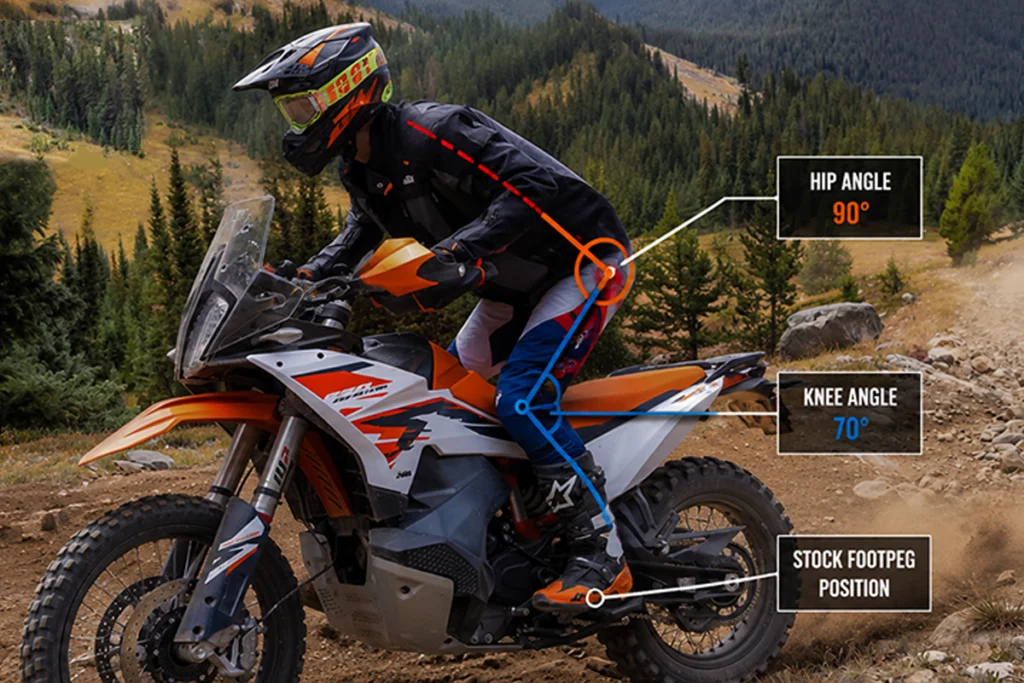
While these modifications can improve comfort, they don’t change the rider’s foundation.
Your feet are the primary connection point between your body and the motorcycle. Every movement—accelerating, braking, cornering, climbing, and descending—starts from the footpegs.
If the foundation remains unchanged, improvements elsewhere often provide only partial results.
That’s why many experienced riders view footpegs as the starting point of the rider triangle.
Why Footpegs Matter More Than Most Riders Think
Footpegs influence nearly every aspect of rider control.
Their position affects:
- Knee angle
- Hip position
- Standing posture
- Weight distribution
- Center of gravity
- Rider mobility
Even a small change in peg position can significantly alter how a motorcycle feels underneath a taller rider.
A few millimeters may not sound like much on paper, but off-road riders often notice the difference immediately when standing through rough terrain.
How Offset Footpegs Change Rider Position
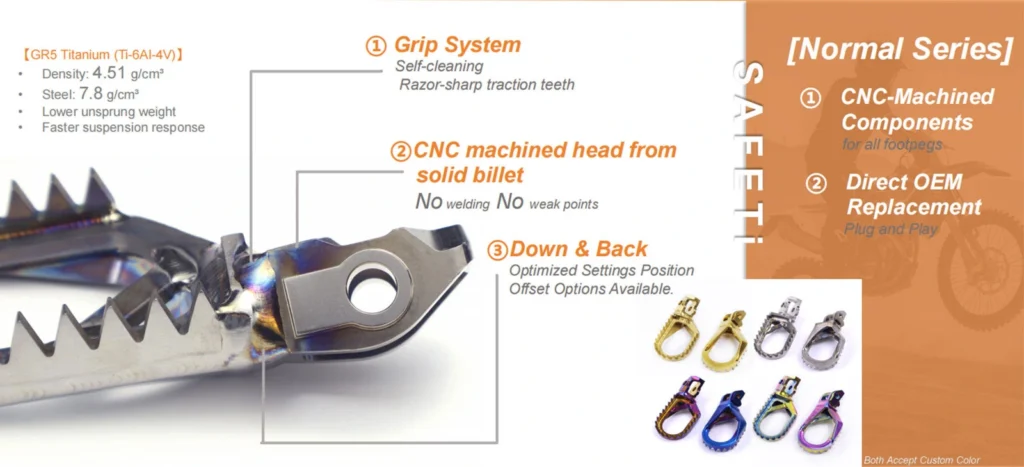
Offset footpegs move the rider’s standing platform relative to the motorcycle chassis.
For tall riders, moving the footpegs slightly rearward and downward can create a more natural riding position.
Benefits often include:
- Increased leg room
- Reduced knee bend
- Easier standing posture
- Improved balance
- More efficient weight transfer
- Less fatigue during long rides
Rather than forcing the rider to adapt to the motorcycle, offset footpegs allow the motorcycle to better fit the rider.How Footpeg Position Affects Motorcycle Control?
Best Footpeg Setup by Rider Height
Every rider is different, but the following recommendations provide a useful starting point.
| Rider Height | Recommended Setup |
|---|---|
| 180–185 cm (5’11″–6’1″) | 5mm Back + 5mm Down |
| 185–195 cm (6’1″–6’5″) | 5mm Back + 10mm Down |
| 195 cm+ (6’5″+) | 5mm Back + 10mm Down |
Height is only part of the equation.
Riding style, inseam length, terrain, and personal preference all influence the ideal setup.
Related products
-

CNC Titanium Motorcycle Footpegs for Kawasaki
$489.99 -
GR5 Titanium Foot Pegs for Beta 2020-2024
$237.99 -
GR5 Titanium Foot Pegs For BMW
Original price was: $169.99.$130.99Current price is: $130.99. -
Gr5 Titanium Foot Pegs for KTM 2017-2023
$237.99


How Different Offset Configurations Affect Control
5mm Back + 5mm Down
This setup offers a subtle ergonomic improvement without dramatically changing rider position.
It’s often a good choice for riders who:
- Alternate between seated and standing riding
- Ride mixed terrain
- Want improved comfort without major adjustment
Benefits include:
- Slightly more leg room
- Natural standing posture
- Improved movement around the bike
- Familiar handling characteristics
Many riders transitioning from stock footpegs find this configuration easy to adapt to.
5mm Back + 10mm Down
For taller riders who spend significant time standing, a larger drop can provide noticeable benefits.
This setup is particularly popular for:
- Enduro riding
- Technical trails
- Mountain terrain
- Long-distance off-road riding
Benefits include:
- Greater knee relief
- More relaxed standing position
- Easier weight transfer during climbs and descents
- Reduced fatigue over long riding sessions
Many riders describe the bike as feeling more natural underneath them, especially when standing for extended periods.
Where Tall Riders Feel the Biggest Improvement
Technical Single Track
In tight terrain, rider movement becomes critical.
Additional room around the bike allows taller riders to react more quickly and maintain better balance through obstacles.
Rocky Climbs
When traction is limited, proper body positioning becomes essential.
Offset footpegs help riders shift weight more efficiently without feeling cramped.
Sand Riding
Deep sand demands constant body movement.
A more open standing position can make it easier to control front-end stability and maintain momentum.
Long Standing Sections
The longer a rider remains standing, the more noticeable ergonomics become.
Reducing strain on knees and hips helps conserve energy throughout the ride.
Why Material Strength Matters for Bigger Riders
Rider height often comes with increased rider weight and greater leverage applied to the motorcycle.
That means footpegs experience substantial forces during:
- Hard landings
- Rock impacts
- Aggressive cornering
- Technical obstacle crossings
This is one reason many performance-focused riders choose high-strength titanium footpegs.
Grade 5 titanium (Ti-6Al-4V) offers an excellent balance of:
- Strength
- Durability
- Corrosion resistance
- Weight reduction
For riders who regularly push their bikes in demanding conditions, material quality can be just as important as peg position.
The Upgrade Most Tall Riders Overlook
Many riders spend hundreds of dollars modifying suspension, handlebars, and seats before addressing the component that directly supports their body.
Yet footpegs influence nearly every movement made on the motorcycle.
For tall riders, even a modest change such as 5mm Back + 5mm Down or 5mm Back + 10mm Down can improve:
- Standing comfort
- Rider mobility
- Weight transfer
- Technical control
- Overall confidence on the bike
The goal isn’t to completely change how the motorcycle handles.
It’s to create a riding position that allows your body to work with the motorcycle instead of against it.
Final Thoughts
The best footpeg setup for tall riders isn’t necessarily the most extreme option. It’s the one that creates a natural standing position while improving control in real-world riding conditions.
For most riders over 180 cm, offset footpegs provide one of the simplest and most effective ergonomic upgrades available.
Whether you’re navigating technical single track, tackling hard enduro terrain, or spending long days on the trail, the right footpeg position can make your motorcycle feel more balanced, more comfortable, and ultimately easier to control.

