
Watch an MXGP race for just a few minutes and you’ll notice something that surprises many new riders.
The fastest riders in the world spend far more time standing than sitting.
Whether they’re charging through braking bumps, floating across deep sand, or attacking rough corners, professional riders seem to stay on their feet almost constantly.
For many amateur riders, that looks exhausting.
After all, sitting feels easier. Sitting feels more comfortable.
So why do the world’s best riders choose to stand when they could sit?
The answer has very little to do with fitness and everything to do with control.
And once you understand the reason, you’ll also understand why footpegs play such a critical role in off-road riding.
Standing Is Not About Looking Aggressive
Many riders assume professional racers stand simply because they’re stronger or more athletic.
That’s only part of the story.
The real reason is that standing allows the motorcycle to move naturally underneath the rider.
A dirt bike is constantly reacting to terrain.
Every bump, rut, rock, landing, and acceleration force creates movement through the suspension.
When a rider stays seated, much of that movement transfers directly into their body.
When standing, the rider’s legs become an additional suspension system.
Instead of absorbing impacts through the lower back and spine, the rider absorbs them through the knees and ankles.
This allows the motorcycle to work more effectively while reducing rider fatigue over long races.
It’s not about working harder.
It’s about working smarter.
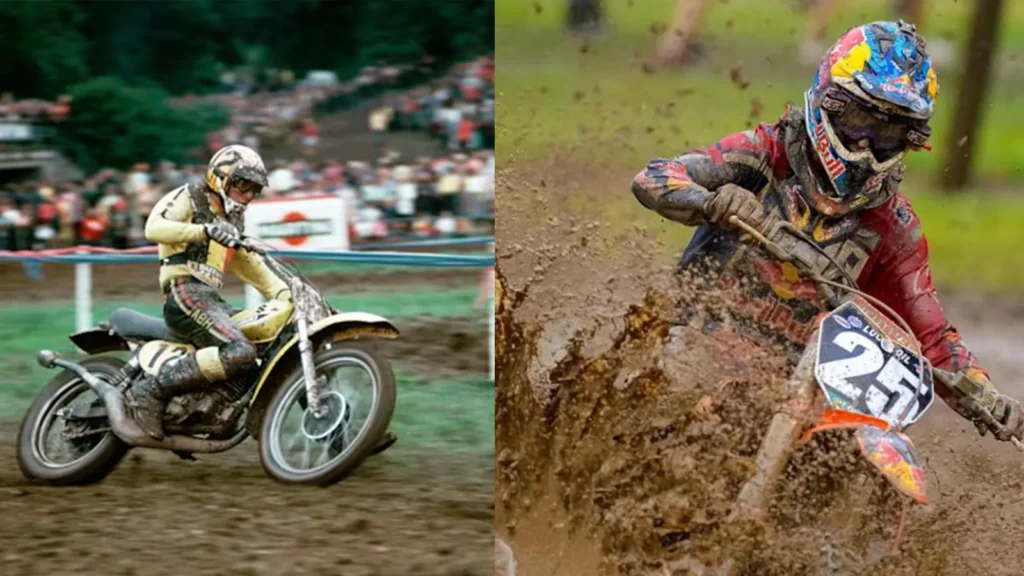
Professional motocross riders spend much of a race standing on the footpegs, allowing the motorcycle to move freely beneath them while maintaining traction and control through challenging muddy terrain.
The Faster the Terrain, the More Important Standing Becomes
Imagine riding across a rough straight filled with braking bumps.
Most beginner riders instinctively sit.
The result is predictable.
The rear wheel kicks.
The bike becomes unstable.
The rider loses confidence and slows down.
Now watch an MXGP rider approach the same section.
Before entering the bumps, they stand.
Their knees bend.
Their elbows stay up.
Their body remains relaxed while the motorcycle moves underneath them.
The difference isn’t bravery.
It’s technique.
Standing separates the rider’s body from the violent movement of the bike.
That separation creates stability.
And stability creates speed.
Your Footpegs Become the Center of Control
One of the biggest misconceptions in off-road riding is that control comes primarily from the handlebars.
Professional riders know that’s not true.
When standing, almost every major body movement starts through the footpegs.
Foot pressure influences:
- Front wheel traction
- Rear wheel grip
- Cornering balance
- Jump control
- Braking stability
- Weight transfer
In many situations, riders are steering the motorcycle with their lower body more than their hands.
This is why experienced racers often say:
“Ride with your feet, not your arms.”
The handlebars guide the bike.
The footpegs control the rider.
Why Beginners Get Tired So Quickly
Have you ever finished a ride with sore forearms and aching shoulders?
You’re not alone.
One of the most common mistakes among newer riders is relying too heavily on the handlebars.
Without realizing it, many riders use their arms to support their body weight.
This creates tension.
Tension creates fatigue.
Fatigue creates mistakes.
Professional riders do the opposite.
Their legs support most of their body weight.
Their feet stay planted on the pegs.
Their upper body remains loose and relaxed.
Because they trust their lower body, they don’t need to fight the motorcycle.
The result is better endurance, smoother riding, and more control.
Related products
-

CNC Titanium Motorcycle Footpegs for Kawasaki
$489.99 -
GR5 Titanium Foot Pegs for Beta 2020-2024
$237.99 -
Gr5 Titanium Foot Pegs for KTM 2017-2023
$237.99 -
GR5 Titanium Foot Pegs for KTM 790 ADV
$169.99



Confidence Starts at Your Feet
Now imagine standing on a wet ladder.
Would you feel comfortable leaning aggressively in any direction?
Probably not.
You’d spend most of your energy worrying about slipping.
The same principle applies to riding.
If your feet don’t feel secure on the footpegs, your body naturally becomes defensive.
You grip the handlebars tighter.
You move less aggressively.
You hesitate when terrain becomes challenging.
Professional riders can push harder because they trust their connection to the motorcycle.
That connection begins at the footpegs.
A stable platform allows riders to:
- Shift weight quickly
- Stand longer
- Absorb impacts efficiently
- Maintain balance in technical terrain
The more confidence riders have in their footing, the more freedom they have to focus on riding.
Why MXGP Riders Rarely Sit Through Rough Sections
A question many riders ask is:
“If sitting uses less energy, why not sit more often?”
The answer is simple.
Because sitting often requires more effort to maintain control.
When terrain becomes rough, a seated rider absorbs every impact directly through the body.
The motorcycle becomes harder to manage.
The rider works harder to stay balanced.
Standing may appear physically demanding, but it often reduces overall workload by allowing the bike and suspension to do their jobs properly.
This is why even at the highest levels of racing, riders stand through sections where less experienced riders instinctively sit.
What Everyday Riders Can Learn From MXGP
You don’t need to race professionally to benefit from standing technique.
In fact, most recreational riders could improve their control significantly by standing more often.
The next time you ride, pay attention to situations where you automatically sit.
Ask yourself:
- Could standing improve balance here?
- Could I allow the bike to move more naturally?
- Am I supporting my weight through my legs or my arms?
Small adjustments often create noticeable improvements.
Many riders discover that standing more frequently reduces fatigue while increasing confidence in rough terrain.
The Footpeg Connection
Every standing movement begins with your feet.
Every weight shift passes through the footpegs.
Every balance correction starts from the platform beneath you.
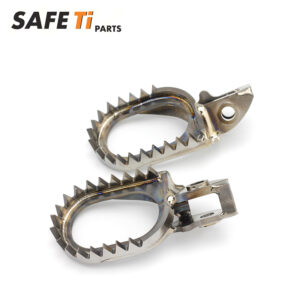
That’s why footpeg design matters more than many riders realize.
Grip, platform size, and riding position all influence how effectively a rider can stay balanced and maintain control.
Professional riders may differ in style, speed, and technique.
But they all rely on one thing.
A solid connection between rider and motorcycle.
And that connection starts at the footpegs.
Final Thoughts
MXGP riders don’t spend so much time standing because it looks impressive.
They stand because it gives them a mechanical advantage.
Standing allows the motorcycle to move freely, improves balance, increases control, and reduces fatigue in demanding terrain.
For amateur riders, the lesson is clear.
The next level of control isn’t always found in more horsepower or expensive suspension upgrades.
Sometimes it’s found in better body positioning and a stronger connection to the motorcycle through the footpegs.
Because when your feet are working properly, the rest of your riding often improves with them.