
Most riders think cornering starts with the handlebars.
It feels logical. After all, when you want to turn a motorcycle, your hands are the first thing that moves.
But watch professional motocross, enduro, or hard enduro riders closely, and you’ll notice something different.
Their hands are surprisingly calm.
Instead of forcing the motorcycle through a corner, they allow the bike to turn naturally while controlling balance, traction, and weight transfer through their feet.
In fact, many experienced riders will tell you that the biggest improvement they ever made wasn’t learning how to steer harder—it was learning how to use foot pressure effectively.
Once you understand this concept, cornering starts to feel less like a fight and more like a controlled flow through the terrain.
The Mistake Most Riders Don’t Realize They’re Making
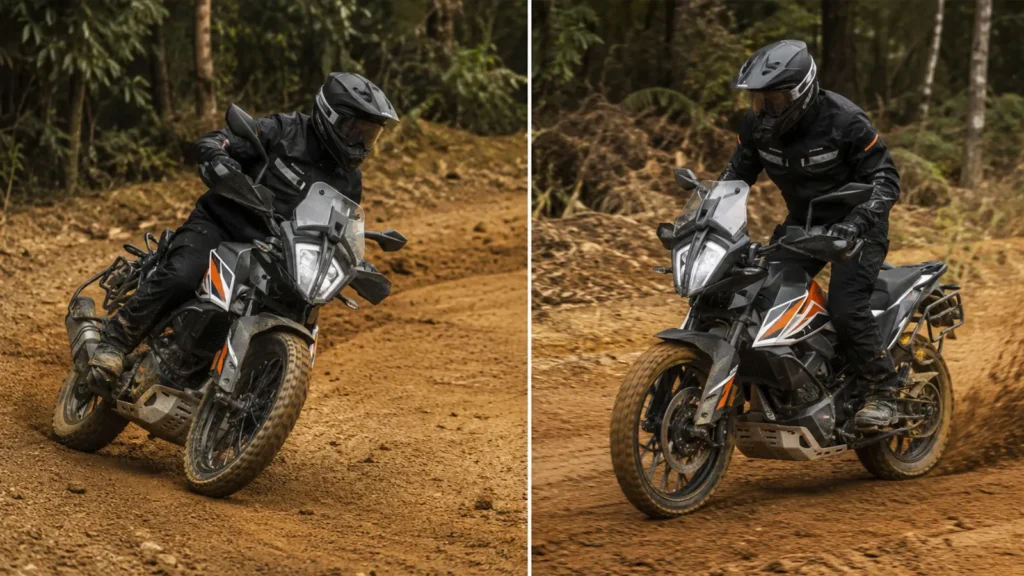
Imagine approaching a flat corner with loose dirt.
You brake.
You lean.
You turn the bars.
But halfway through the corner, the front wheel feels nervous.
The bike drifts wider than expected.
You instinctively tighten your grip on the handlebars.
Sound familiar?
This is one of the most common situations amateur riders experience.
The problem usually isn’t the handlebars.
The problem is often a lack of weight control through the footpegs.
Many riders try to solve cornering issues with more steering input when what the motorcycle really needs is better balance.
Professional riders understand that traction follows weight.
And weight is controlled largely through the feet.
Why Foot Pressure Matters More Than You Think
A dirt bike changes direction because its tires generate grip.
Grip comes from traction.
Traction depends on how weight is distributed between the front and rear wheels.
Every time you apply pressure to a footpeg, you influence that weight distribution.
Small changes in foot pressure can affect:
- Cornering stability
- Front tire grip
- Rear wheel traction
- Rider balance
- Chassis behavior
This is why experienced riders often talk about “weighting the pegs.”
They’re not simply standing on the motorcycle.
They’re actively using the footpegs as control points.
Understanding how riders use foot pressure starts with understanding why professional racers spend so much time on their feet in the first place. In modern motocross and enduro riding, standing is often the foundation of control rather than simply a riding posture.
Related: Why MXGP Riders Spend So Much Time Standing
The Outside Footpeg Technique
If you’ve ever asked a professional rider how to corner faster, chances are you’ve heard the phrase:
“Weight the outside peg.”
But what does that actually mean?
When the motorcycle leans into a corner, the rider applies additional pressure through the outside footpeg.
This creates a more stable platform and helps maintain balance as the motorcycle changes direction.
Think about riding a mountain bike.
When cornering aggressively, you naturally push down through the outside pedal.
The principle is remarkably similar on a dirt bike.
Weighting the outside footpeg helps:
- Stabilize the chassis
- Reduce unwanted body movement
- Increase rider confidence
- Improve cornering consistency
The key is not stomping on the peg.
The pressure should feel deliberate but controlled.
Professional riders are constantly making subtle adjustments rather than dramatic movements.
Related products
-

CNC Titanium Motorcycle Footpegs for Kawasaki
$489.99 -
GR5 Titanium Foot Pegs for Beta 2020-2024
$237.99 -
GR5 Titanium Foot Pegs For BMW
Original price was: $169.99.$130.99Current price is: $130.99. -
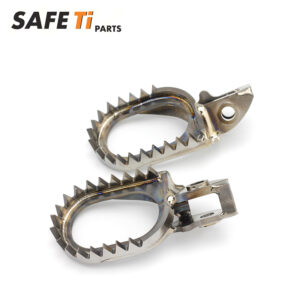
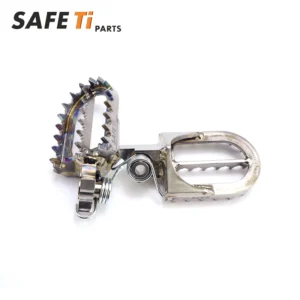
GR5 Titanium Foot Pegs for KTM 790 ADV
$169.99


Why Professional Riders Look So Smooth
One of the biggest differences between amateur and professional riders is efficiency.
Beginners often make dozens of unnecessary corrections throughout a corner.
Professionals usually make fewer.
Why?
Because they establish balance earlier.
Before entering the corner, experienced riders begin positioning their weight.
As the motorcycle leans, their feet are already controlling body position.
The result is a motorcycle that feels settled rather than unstable.
This is one reason elite riders appear calm even when riding at incredible speeds.
The motorcycle is working with them instead of against them.
How Foot Pressure Improves Front-End Grip
Many riders struggle with front-end washouts.
When the front tire loses grip unexpectedly, confidence disappears quickly.
A common reaction is to sit farther back.
Unfortunately, that often makes the problem worse.
By shifting too much weight rearward, riders unload the front tire and reduce available traction.
Professional riders manage this differently.
Through careful footpeg pressure and body positioning, they maintain enough weight over the front wheel to generate grip without overwhelming the tire.
This balance is critical.
Too little weight and the front slides.
Too much weight and the front pushes.
The goal is controlled loading, not excessive loading.
What Happens in Loose Terrain
Loose dirt, sand, and mud create a unique challenge.
Traction levels change constantly.
The motorcycle never feels perfectly planted.
This is where foot pressure becomes even more important.
Instead of reacting to every movement through the handlebars, professional riders make subtle adjustments through their feet.
As traction changes, they adjust body position.
As the rear wheel moves, they maintain balance.
As the front wheel searches for grip, they stay relaxed.
Their lower body absorbs the instability while their upper body remains controlled.
This is one reason elite riders often appear almost effortless in difficult terrain.
What looks easy is actually the result of thousands of small adjustments made through the footpegs.
Why Tight Handlebars Create Bigger Problems
Many riders unknowingly make cornering more difficult by squeezing the handlebars too hard.
This creates tension throughout the upper body.
Tension reduces mobility.
Reduced mobility limits balance.
And limited balance makes cornering less predictable.
Professional riders use the opposite approach.
They support more of their body weight through their legs.
Because their feet provide stability, their hands remain free to guide the motorcycle rather than hold onto it.
A useful test is simple.
After a ride, ask yourself where you feel fatigue.
If your forearms are exhausted but your legs feel fresh, you’re probably relying too much on the handlebars.
Practicing Foot Pressure Without Riding Faster
One misconception is that foot pressure techniques only matter at race pace.
That’s not true.
You can practice them at moderate speeds.
The next time you ride, focus on a simple flat corner.
As you enter the turn:
- Stay relaxed.
- Keep your eyes looking ahead.
- Apply deliberate pressure through the outside footpeg.
- Avoid pulling on the handlebars.
- Let the motorcycle lean naturally beneath you.
You may not immediately corner faster.
But you’ll likely notice that the motorcycle feels more balanced.
Consistency usually improves before speed does.
And consistency is exactly what professional riders develop first.
The Role of Footpeg Design
At this point, some riders ask an important question.
If foot pressure is so critical, does footpeg design actually matter?
The answer is yes.
The footpegs are your primary connection to the motorcycle when standing.
A stable platform allows riders to apply pressure confidently and consistently.
Poor grip can create hesitation.
A platform that’s too small may reduce comfort during long rides.
A footpeg that lacks stability can make precise weight transfer more difficult.
This is one reason many experienced riders upgrade footpegs long before modifying engine performance.
More power doesn’t help much if you can’t effectively control the motorcycle.
Why Professional Riders Trust Their Feet
Watch professional riders long enough and you’ll notice a pattern.
The fastest riders aren’t constantly wrestling with the motorcycle.
They’re flowing with it.
Their movements appear effortless because they understand where control really comes from.
Cornering isn’t simply about steering.
It’s about balance.
It’s about traction.
It’s about managing weight.
And much of that happens through the feet.
The handlebars may point the motorcycle toward the corner exit, but the footpegs help determine how stable, controlled, and confident that journey feels.
Final Thoughts
Most riders spend years trying to improve corner speed by focusing on braking later, leaning farther, or turning harder.
Those techniques have their place.
But many overlook one of the most important tools available.
Foot pressure.
Professional riders use foot pressure to control balance, maintain traction, and stabilize the motorcycle throughout a corner.
It’s a technique that works in motocross, enduro, hard enduro, and trail riding alike.
The best part is that it doesn’t require expensive modifications or advanced racing experience.
It simply requires awareness and practice.
For taller riders, learning proper foot pressure often becomes easier when the riding position matches their body dimensions. This is one reason many experienced riders experiment with lower or offset footpegs to improve comfort and control.
Related: Why More Tall Riders Are Choosing Lower Footpegs
And once you begin using your footpegs as active control points rather than passive footrests, you’ll likely discover what professional riders have known all along:
The fastest way through a corner often starts from the ground up.

