
If you’ve ever watched experienced enduro or motocross riders tackle technical terrain, you’ve probably noticed something right away:
They’re standing far more than they’re sitting.
Whether it’s a rocky climb, a deep sand wash, a root-covered trail, or a rough motocross section, skilled riders instinctively get up on the pegs when the terrain becomes challenging.
For newer riders, that might seem strange. After all, motorcycles come with seats for a reason.
But off-road riding is different from riding on the street. The moment traction becomes unpredictable and the terrain starts fighting back, standing gives riders a significant advantage.
And here’s something many riders don’t realize until they’ve spent enough time on the trail:
The benefits of standing don’t start at the handlebars.
They start at the footpegs.
Standing Gives the Bike Room to Work
One of the biggest mistakes newer riders make is trying to stay seated when the trail gets rough.
The problem is simple.
When you’re sitting, your body becomes attached to every movement the motorcycle makes. Every rock, root, rut, and bump gets transferred directly into your upper body.
The rougher the terrain gets, the harder you have to fight the motorcycle.
Standing changes everything.
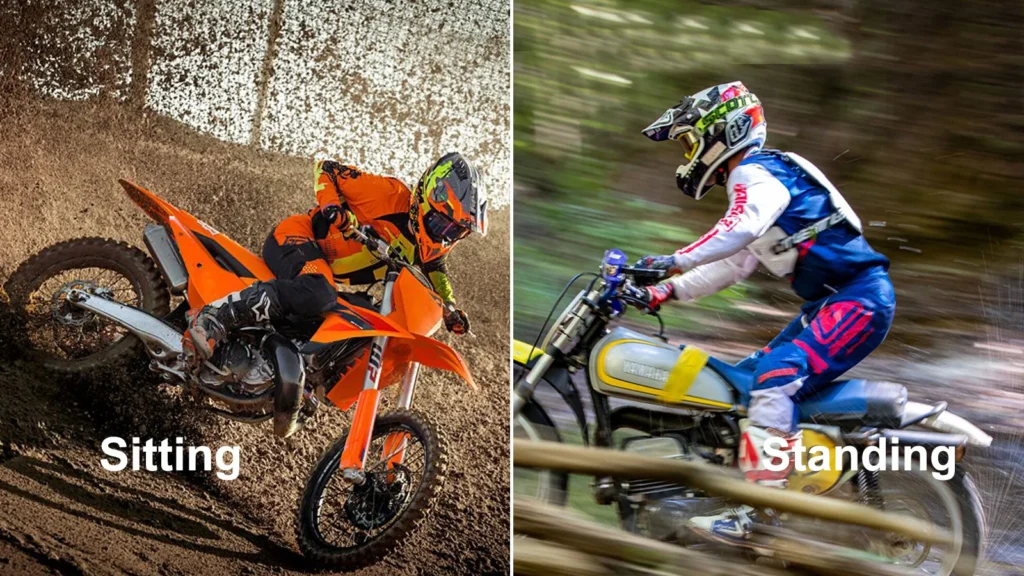
By getting up on the pegs and slightly bending your knees, you allow the bike to move beneath you while your body remains balanced and centered.
Instead of resisting every impact, you’re working with the terrain.
That’s why experienced riders stand when approaching:
- Rock gardens
- Technical climbs
- Deep sand sections
- Root-covered trails
- Whoops and rough terrain
- Loose or unpredictable surfaces
The bike is free to move, and the rider remains in control.
Your Legs Become Part of the Suspension
A motorcycle’s suspension can only do so much.
Once the trail becomes truly rough, your body becomes an extension of the suspension system.
When you’re standing, your knees and ankles absorb impacts before they reach your arms, shoulders, and lower back.
Think about the last time you hit a hidden rock or dropped into a rut unexpectedly.
If you’re sitting, the impact often travels directly through the bike and into your body.
When standing, your legs absorb much of that energy.
This helps:
- Reduce rider fatigue
- Improve bike stability
- Maintain traction
- Increase comfort during long rides
- Improve control over rough terrain
Many experienced riders describe standing as allowing the bike to “float” underneath them.
It’s not because the terrain becomes smoother.
It’s because their body is helping manage the impacts.
Why Standing Improves Control
Control isn’t just about steering.
In off-road riding, control is about constantly managing traction, balance, and weight distribution.
Every obstacle requires small adjustments.
Standing allows those adjustments to happen naturally.
Need more front-wheel traction entering a corner?
Shift your weight forward.
Need more rear-wheel grip climbing a hill?
Move your weight back.
Need to stay balanced through a rock garden?
Keep your body centered while the motorcycle moves beneath you.
These corrections happen faster and more precisely when you’re standing.
That’s one reason professional riders spend so much time on the pegs.
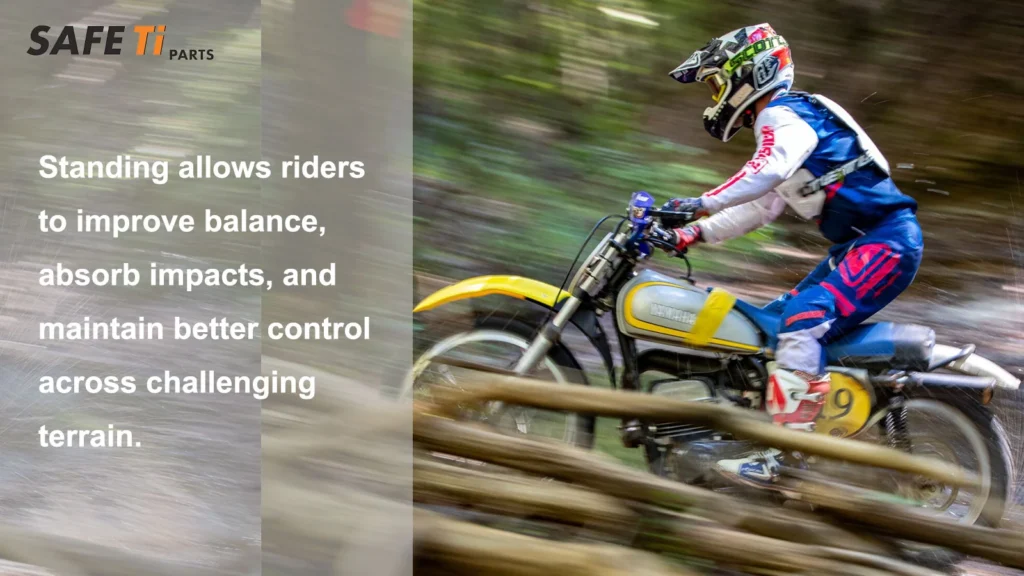
The standing position gives them the freedom to react instantly to changing terrain.
Here’s What Most Riders Overlook: Control Starts at the Footpegs
When riders think about control upgrades, they often focus on handlebars, suspension, tires, or engine performance.
Those components matter.
But every standing movement begins somewhere else.
Your footpegs are the primary connection between your body and the motorcycle.
Every shift in body position passes through them.
Every weight transfer starts there.
Every balance correction begins there.
Think about what happens when you:
- Weight the outside peg in a corner
- Lean forward during a climb
- Shift rearward on a descent
- Correct a slide
- Absorb an impact
Your feet are doing the work.
And they’re doing it through the footpegs.
The better that connection feels, the more confident and controlled the motorcycle feels beneath you.
The Longer You Stand, the More Footpegs Matter
A short trail ride might not reveal the importance of footpegs.
A long day in the woods definitely will.
Ask any rider who regularly spends hours on technical singletrack, hard enduro terrain, or rough mountain trails.
Small footpeg problems become big problems over time.
A narrow platform can create pressure points in your boots.
Insufficient grip can force you to constantly reposition your feet.
Poor support can increase fatigue and reduce confidence when conditions become difficult.
After several hours of riding, those issues become impossible to ignore.
That’s why many experienced off-road riders eventually upgrade their footpegs before making other modifications.
They understand that standing comfort directly affects riding performance.
What Serious Off-Road Riders Look for in a Footpeg
Not all footpegs are designed with aggressive off-road riding in mind.
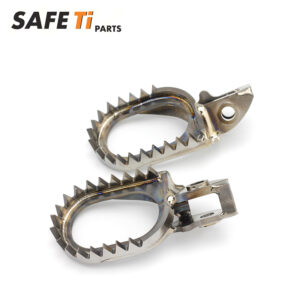
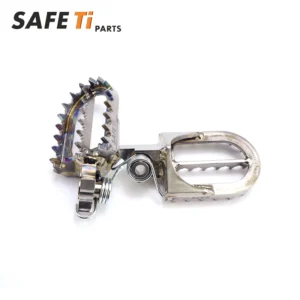
The best footpegs provide a stable platform that supports rider movement without sacrificing grip or durability.
A Wider Platform
A larger platform distributes pressure more evenly across the rider’s boots.
This improves comfort during long rides and provides a more stable foundation when standing.
Less pressure on your feet means less fatigue and more confidence when the terrain gets rough.
Reliable Grip
Off-road conditions change constantly.
Mud, water, loose dirt, and dust all affect traction between your boots and the bike.
Aggressive traction teeth help maintain a secure connection regardless of the conditions.
When your feet stay planted, your body movements become more precise.
Related products
-

GR5 Titanium Foot Pegs for Beta 2020-2024
$237.99 -
GR5 Titanium Foot Pegs For BMW
Original price was: $169.99.$130.99Current price is: $130.99. -
Gr5 Titanium Foot Pegs for KTM 2017-2023
$237.99

Strength Without Excess Weight
Off-road footpegs endure constant abuse.
Rocks, impacts, crashes, and hard landings place significant stress on them.
That’s why strength matters.
At the same time, many riders want to avoid unnecessary weight.
Finding the balance between durability and weight savings is one reason titanium footpegs have become increasingly popular among serious riders.
Optimized Riding Position
Many riders are also discovering the benefits of footpegs designed to improve rider ergonomics.
Depending on rider height and riding style, lower or offset footpegs can create a more comfortable standing position and improve overall control.
For riders who spend long hours standing, even small position changes can make a noticeable difference.
Why More Riders Are Switching to Titanium Footpegs
Titanium has earned a strong reputation in the off-road world for one simple reason:
It offers exceptional strength without excessive weight.
Compared to traditional materials, high-quality titanium footpegs provide several advantages:
- Outstanding strength-to-weight ratio
- Excellent corrosion resistance
- Long-term durability
- Consistent performance in harsh riding environments
For riders who regularly encounter rocks, roots, mud, water crossings, and hard impacts, these benefits can add up quickly.
Titanium isn’t just about saving weight.
It’s about creating a component capable of handling years of demanding riding conditions.
Built for Riders Who Spend More Time Standing
At SAFETi, every footpeg starts with a simple belief:
The more time you spend standing, the more important your footpegs become.
That’s why our footpegs are engineered specifically for riders who push their motorcycles beyond smooth trails and easy terrain.
Manufactured from aerospace-grade GR5 titanium alloy and precision CNC machined for accuracy, SAFETi Titanium Footpegs are designed to provide the grip, strength, and stability serious off-road riders demand.
Whether you’re navigating technical singletrack, charging through enduro sections, attacking steep hill climbs, or racing motocross, your feet need a platform you can trust.
Because when the terrain gets rough, confidence starts from the ground up.
Final Thoughts
The best off-road riders don’t stand because it’s trendy.
They stand because it works.
Standing allows the bike to move more naturally, helps riders absorb impacts, improves traction, and provides greater control when conditions become unpredictable.
And when you’re standing, every movement begins at the footpegs.
They’re more than a place to rest your boots.
They’re the foundation of balance, control, and rider confidence.
Choose the right footpegs, and you’ll notice the difference every time the trail gets rough.
Why do dirt bike riders stand up?
Standing improves balance, traction, and rider control by allowing the motorcycle to move freely beneath the rider while maintaining stability.
Is standing better than sitting when riding off-road?
Neither is always better. Experienced riders constantly switch between standing and sitting depending on terrain, speed, and traction conditions.
Do footpegs affect motorcycle control?
Yes. Footpegs are a primary contact point between the rider and motorcycle, influencing balance, weight transfer, and overall control.
Are titanium footpegs worth it?
Titanium footpegs offer excellent strength, corrosion resistance, and durability while maintaining a lightweight design, making them popular among serious off-road riders.

