Most riders spend countless hours looking for ways to improve their bikes.
They upgrade suspension, install performance exhaust systems, and experiment with different handlebars. Yet one of the most overlooked modifications sits directly beneath their boots.
The footpegs.
For riders who spend significant time standing, footpegs are more than a place to rest their feet. They are one of the primary contact points between the rider and the motorcycle.
Every weight shift, every corner correction, and every technical maneuver starts from the pegs.
That’s why even a small change in footpeg position can dramatically influence comfort, confidence, and motorcycle control.
A setup that moves the footpegs 10mm back and 5mm down may seem minor on paper, but in real-world riding conditions, the difference is surprisingly noticeable.
Why Footpeg Position Matters More Than Most Riders Think
When discussing motorcycle ergonomics, riders often focus on seat height and handlebar position.
Those factors certainly matter.
However, during off-road riding, especially in enduro and motocross conditions, riders spend much of their time standing.
At that point, the footpegs become the foundation of rider control.
A proper footpeg position affects:
- Rider balance
- Weight transfer
- Standing comfort
- Cornering stability
- Overall bike control
The relationship between the handlebars, seat, and footpegs creates what riders often call the “rider triangle.”
When one point changes, the entire riding experience changes with it.
How Footpeg Position Affects Motorcycle Control
Common Problems with Stock Footpeg Position
Motorcycle manufacturers build bikes to fit a broad range of riders.
The result is often a compromise rather than an optimized setup.
Many riders encounter issues such as:
Feeling Cramped While Standing
Taller riders frequently feel confined during long standing sections.
This can force awkward body positioning and reduce control in technical terrain.
Difficulty Shifting Body Weight
Off-road riding requires constant movement.
Whether attacking a corner or climbing a steep hill, riders need to move freely around the bike.
Stock peg locations can sometimes restrict that movement.
Increased Fatigue
Small ergonomic issues become magnified after several hours on the trail.
What feels acceptable during a short ride may become uncomfortable during an all-day enduro event.
Reduced Confidence
When body positioning feels unnatural, riders often become less aggressive and less precise.
The motorcycle may not feel like an extension of the rider.
Why Footpeg Ergonomics Matter in Off-Road Riding
Unlike street riders, off-road riders constantly transition between seated and standing positions.
Footpegs serve as the platform that supports nearly every movement.
Proper footpeg ergonomics help riders:
- Maintain balance
- Absorb impacts
- Control traction
- Reduce rider fatigue
- Improve stability
This becomes particularly important during:
- Rock gardens
- Deep ruts
- Steep climbs
- Sand sections
- Technical enduro terrain
When the rider feels balanced, the motorcycle becomes easier to control.
What Happens When Footpegs Move 10mm Back
Moving the footpegs rearward changes the rider’s relationship with the motorcycle.
The difference is not dramatic enough to feel unnatural, but it is significant enough to improve rider comfort and control.
Benefits often include:
More Natural Standing Position
The rider gains additional room to move.
Standing feels less cramped and more relaxed.
Better Weight Distribution
Rearward footpegs help riders maintain a balanced body position while standing.
This is particularly useful during technical climbs and descents.
Improved Rider Mobility
Transitions between seated and standing positions become smoother.
The rider can move around the motorcycle with less effort.
What Happens When Footpegs Move 5mm Down
Lowering the footpegs by 5mm changes the rider triangle in a subtle but effective way.
Increased Leg Room
A lower peg position opens the knee angle.
Many riders immediately notice improved comfort.
Reduced Fatigue
Less strain on the knees and hips often translates into better endurance.
Improved Standing Stability
The rider feels more planted on the motorcycle, particularly in rough terrain.
For taller riders, this small adjustment can make a surprisingly large difference.
Why the 10mm Back and 5mm Down Combination Works So Well
Individually, both changes provide benefits.
Combined, they create a riding position that feels noticeably more comfortable and controlled.
The rearward position improves rider movement.
The lower position increases comfort and stability.
Together they create:
- Better balance
- Improved standing posture
- Reduced fatigue
- Enhanced control in technical terrain
This combination is especially effective for riders who spend extended periods standing on the pegs.
Which Riders Benefit Most from This Setup?
Enduro Riders
Long technical rides demand comfort and efficiency.
A more natural standing position helps conserve energy.
Hard Enduro Riders
Every obstacle requires precise body positioning.
Improved ergonomics can make difficult terrain feel more manageable.
Motocross Riders
Better rider mobility can improve confidence during jumps, braking, and cornering.
Adventure Riders
Long-distance off-road travel becomes more comfortable when rider fatigue is reduced.
Taller Riders
Many taller riders appreciate the additional room created by lower and rearward footpegs.
Real-World Benefits on Enduro and Motocross Bikes
The advantages become most noticeable when riding conditions become challenging.
Technical Climbs
Improved body positioning helps riders maintain traction and control.
Rock Gardens
A stable platform allows faster reactions to unexpected impacts.
Deep Ruts
Weight shifts become smoother and more predictable.
Fast Trail Sections
Less fatigue means more consistent control throughout the ride.
Long Race Conditions
Small ergonomic improvements can have a significant impact over several hours of riding.
Why Titanium Footpegs Matter
Position is only part of the equation.
Material selection also affects performance and durability.
Titanium footpegs offer several advantages for serious off-road riders.
Lightweight Performance
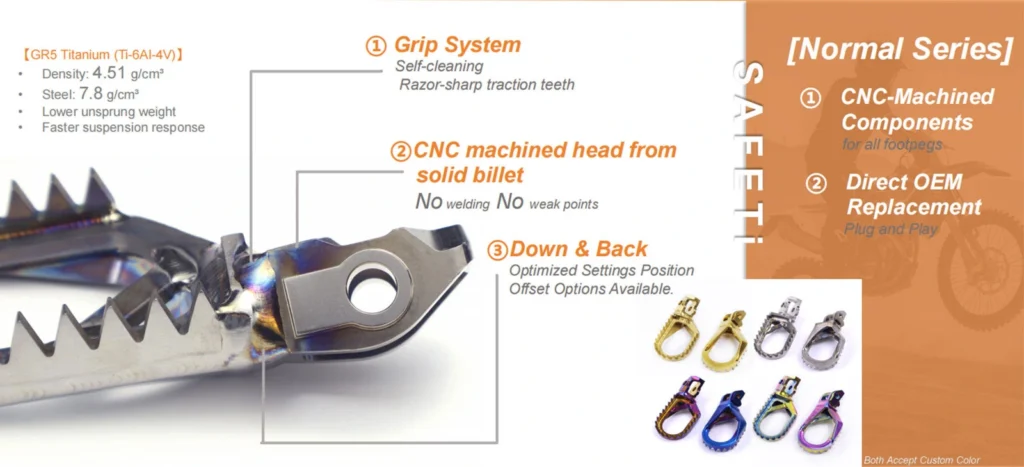
Titanium delivers exceptional strength while helping reduce unnecessary weight.
Outstanding Durability
Off-road motorcycles endure constant impacts from rocks, roots, and hard landings.
Titanium is well suited for these demanding conditions.
Long-Term Reliability
High-quality titanium footpegs resist corrosion and maintain their structural integrity even after years of use.
Titanium Footpegs Pressure Test
Why SAFETi Chose a 10mm Back and 5mm Down Design
SAFETi developed this geometry with a simple goal.
Improve rider comfort and control without fundamentally changing the character of the motorcycle.
By moving the footpegs 10mm rearward and 5mm lower than stock, riders gain a more natural standing position while maintaining excellent control across a wide variety of terrain.
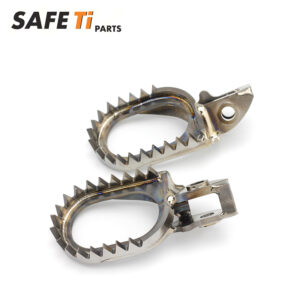
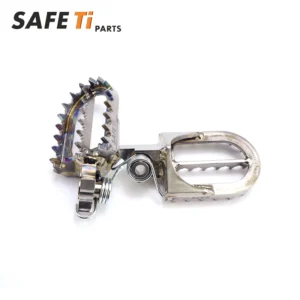
Combined with lightweight titanium construction, aggressive traction teeth, and exceptional durability, SAFETi Titanium Footpegs are designed for riders who demand performance in real-world off-road conditions.

Does footpeg position really affect motorcycle control?
Yes. Footpegs are one of the primary contact points between the rider and the motorcycle. Changes in footpeg position can influence balance, comfort, weight transfer, and overall control.
Why move footpegs 10mm back?
Moving footpegs rearward creates a more natural standing position and allows riders to shift their body weight more effectively.
What are the benefits of lowering footpegs 5mm?
Lower footpegs can improve comfort, reduce knee bend, and help riders maintain a more relaxed standing posture.
Are lower footpegs better for taller riders?
In many cases, yes. Taller riders often benefit from increased leg room and improved ergonomics.
Are titanium footpegs worth upgrading?
For riders who regularly ride off-road, titanium footpegs offer advantages in durability, weight reduction, corrosion resistance, and long-term performance.
What riding styles benefit most from this setup?
This footpeg position works particularly well for:
- Enduro riding
- Hard enduro
- Motocross
- Trail riding
- Adventure riding
Any rider who spends significant time standing can potentially benefit from improved footpeg ergonomics.
Conclusion
Motorcycle control is influenced by countless factors, but footpeg position is often one of the most underestimated.
A footpeg setup positioned 10mm back and 5mm down can improve standing comfort, rider mobility, and overall confidence in challenging terrain.
For riders who spend their weekends tackling enduro trails, racing motocross tracks, or exploring technical off-road routes, the right footpeg position can make every ride feel more natural and more controlled.
With a carefully engineered 10mm back and 5mm down geometry, combined with the strength and durability of titanium construction, SAFETi Titanium Footpegs are built to help riders stay comfortable, stay balanced, and stay in control when the terrain gets tough.
Ready to Upgrade Your Riding Position?
SAFETi Titanium Footpegs are engineered for riders who spend their time standing, attacking technical terrain, and demanding more control from every ride.
✔ Titanium Construction
✔ Aggressive Grip Design
✔ 10mm back / 5mm down
✔ Built for Enduro and Motocross
Explore the full SAFETi Titanium Footpeg lineup and discover how a small change in footpeg position can make a big difference on the trail.
Related products
-

CNC Titanium Motorcycle Footpegs for Kawasaki
$489.99 -
GR5 Titanium Foot Pegs for Beta 2020-2024
$237.99 -
GR5 Titanium Foot Pegs For BMW
Original price was: $169.99.$130.99Current price is: $130.99. -
Gr5 Titanium Foot Pegs for KTM 2017-2023
$237.99